
How to Inspect the Heating and Cooling System When House Hunting.
Introduction: The Hidden Cost Most Buyers Overlook
Buying a home is one of the most significant financial decisions you will ever make. You walk through the front door, admire the kitchen countertops, picture your furniture in the living room, and imagine family gatherings in the backyard. But somewhere between falling in love with the crown molding and negotiating the closing costs, most buyers completely forget to pay attention to one of the most expensive and critical systems in the entire house: the heating and cooling system.
An HVAC system that is failing, poorly maintained, or nearing the end of its lifespan can cost you thousands of dollars within your first year of ownership. A full system replacement ranges from $5,000 to $12,000 or more depending on the size of the home. And yet, most buyers spend less than five minutes looking at the furnace and never once think to ask about the air ducts.
This guide is here to change that. Whether you are a first-time buyer or a seasoned homeowner making a new purchase, learning how to properly inspect the heating and cooling system before you sign on the dotted line will save you from unwelcome surprises, budget blowouts, and a lot of cold nights.
Section 1: Start With the Basics, Know What You Are Looking For
Before you can inspect anything, you need to understand what a complete HVAC system includes. A standard residential system consists of a furnace or heat pump, a central air conditioning unit, a thermostat, and a network of air ducts that distribute conditioned air throughout the home.
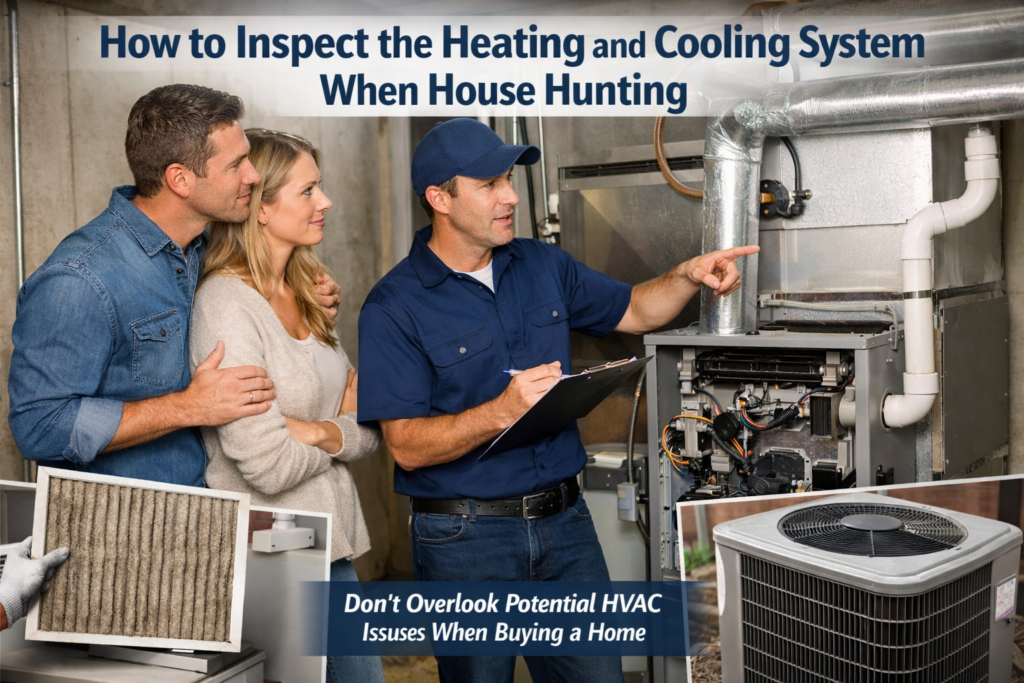
When you tour a home, resist the urge to skip the utility room or the basement. That is where the furnace lives, and it tells a story. Look for the age of the unit, which is typically printed on a label or stamped on the equipment itself. Most furnaces have a functional lifespan of 15 to 20 years, and central air conditioning units typically last 12 to 15 years. If the system is approaching or beyond those thresholds, you need to factor a replacement into your budget negotiation.
Beyond age, look for visible rust, corrosion, or cracks around the heat exchanger. A cracked heat exchanger is not just an expensive repair; it is a serious safety hazard because it can allow carbon monoxide to enter the living spaces of the home. Check whether the area around the unit is clean and organized, or whether it appears neglected and ignored. A dirty, dusty furnace surrounded by clutter is often a sign that the previous owners did not prioritize maintenance.
Also take note of whether the system is a central air setup or a zone-based system. Zone systems offer more energy efficiency but come with additional complexity and more components that can require attention down the road.
Section 2: Ask the Right Questions and Request Maintenance Records
One of the most powerful things you can do during the inspection process is simply ask questions. Many buyers feel uncomfortable pressing sellers for details, but understanding the maintenance history of an HVAC system is completely reasonable and professionally expected.
Ask the seller or listing agent when the system was last serviced. A well-maintained HVAC system should receive professional service at least once a year, ideally twice, once in the spring before cooling season and once in the fall before heating season. If the seller cannot produce a single service record, that is a meaningful red flag.
Ask specifically about the air ducts. Ductwork is one of the most overlooked components in a home sale, and it directly impacts indoor air quality, energy efficiency, and the overall performance of the HVAC system. Ducts that have never been cleaned can harbor dust, mold, pet dander, allergens, and even rodent debris. In regions with older housing stock, this is especially important. Homebuyers in the Mountain West, for example, often seek out professional air duct cleaning salt lake city services after purchase when they discover that the previous owners never addressed ductwork hygiene. It is a smart investment, but it is even smarter to factor it in before you close.
You should also ask whether any major repairs have been made, whether the refrigerant has been checked or recharged, and whether the system has ever triggered a carbon monoxide alarm. These questions are not invasive; they are responsible.
Section 3: What to Look for During the Physical Walk-Through
Even without a professional inspection, you can learn a great deal about the HVAC system simply by using your senses and paying attention during your walk-through.
Turn the thermostat on and wait. Set it to both heating and cooling mode if the season allows and give the system five to ten minutes to respond. Walk through every room of the house and feel the airflow from each vent. Inconsistent airflow, where some rooms feel strong and others barely register, can indicate duct leaks, blockages, or a system that is struggling to keep up with the size of the home.
Listen carefully. A healthy HVAC system runs with a relatively consistent, quiet hum. Banging, rattling, squealing, or clicking sounds are warning signs that something mechanical is off. These noises do not always mean a catastrophic failure is imminent, but they do mean that a technician needs to investigate further before you commit to a purchase.
Smell the air. Musty or stale odors coming from the vents can suggest mold growth inside the ductwork, which is a health concern and a remediation cost that can run into the hundreds or thousands of dollars. A burning smell when the heat turns on can indicate a dirty or failing component.
Check the filters while you are at it. A clogged, blackened air filter that clearly has not been changed in months tells you everything you need to know about how the previous occupants approached home maintenance. Filters should be changed every one to three months depending on the home and household.
Look at the outdoor condenser unit as well. It should be level on its pad, free of significant debris, and have adequate clearance on all sides. Bent fins, signs of freeze damage, or ice buildup are causes for concern.
Section 4: Always Hire a Licensed HVAC Inspector
Your general home inspector will give the HVAC system a basic look, but a general inspection is not the same as a dedicated HVAC evaluation. General inspectors are trained to identify obvious issues, but they are not always equipped to assess refrigerant levels, heat exchanger integrity, duct efficiency, or airflow balance with the same depth that a licensed HVAC technician can.
Before your inspection contingency expires, consider hiring a certified HVAC professional to do a dedicated system evaluation. The cost is typically between $75 and $200, and it can give you the detailed information you need to negotiate repairs, request a price reduction, or walk away from a deal that would otherwise drain your finances.
A professional HVAC inspector will check refrigerant charge, measure airflow at each register, test the heat exchanger, assess the electrical connections, evaluate duct condition, and give you an honest assessment of how many years the system realistically has left. That information is invaluable at the negotiating table.
If the inspection reveals that the ducts are heavily soiled or compromised, use that finding to negotiate a credit toward professional duct cleaning or remediation. In many markets, buyers successfully negotiate HVAC-related credits ranging from a few hundred dollars for a duct cleaning to several thousand for system repairs or replacements.
Conclusion: Protect Your Investment Before You Sign
A home is more than walls and windows; it is the sum of every system working together to keep your family comfortable, safe, and healthy. The heating and cooling system sits at the center of that equation. It controls the temperature, influences the air quality, and contributes significantly to your monthly energy costs. Ignoring it during the buying process is not just an oversight; it is a risk that can follow you for years.
Take the time to look at the age and condition of the equipment, ask for maintenance records, listen and smell during your walk-through, and invest in a professional HVAC evaluation before you close. If the ductwork has been neglected, factor in the cost of remediation, because clean ducts are not a luxury; they are a basic component of a healthy home.
